Hospital Medicine KPI Analytics

Real-time visibility that helps hospital medicine leaders reduce workload strain, improve patient flow, and make confident operational decisions.

Talk To An Expert
patient assignment

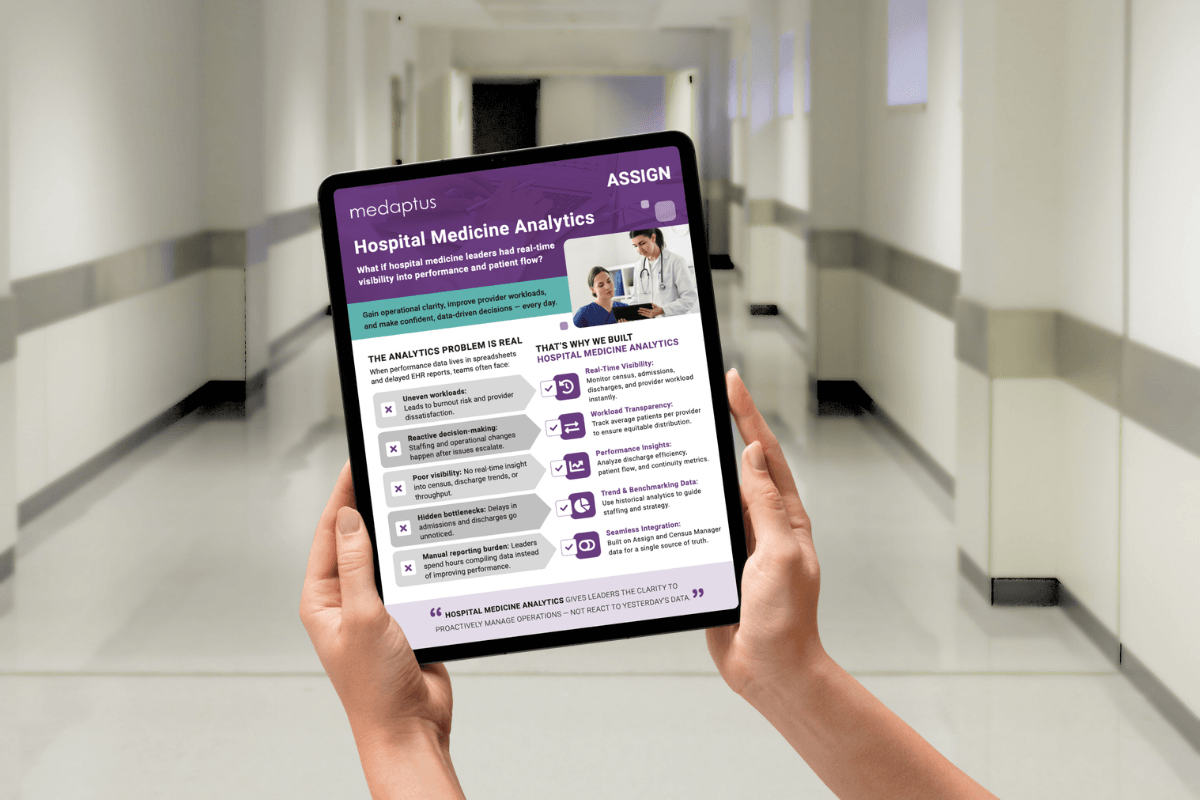
The Problem: Hospitalists Are Overloaded — and Leaders Don’t Have the Daily Insights to Fix It

Running a hospital medicine program requires constant balance: staffing, admissions, discharges, rounding workloads, and flow. Yet most leaders lack the real-time visibility needed to manage these moving parts effectively.

Common challenges include:

• Uneven hospitalist workloads
• Delayed or unpredictable discharge timing
• Unclear patient flow and bottlenecks
• Limited insight into daily rounding list changes
• Inconsistent distribution of new patients
• Staffing decisions based on guesswork instead of data
• A constant feeling of “reacting to the day” instead of leading it

When leaders don’t get actionable information fast enough, it becomes harder to rebalance workloads, improve throughput, or address issues before they escalate. The result is avoidable stress, slowdowns in care progression, patient flow inefficiencies, and hospitalist burnout.

Real-time hospital medicine analytics solve these challenges by giving leaders clarity—exactly when they need it.


The Solution: Actionable, Real-Time KPI Analytics for Hospital Medicine

Hospital Medicine KPI Analytics provides an immediate understanding of what’s happening across the program so leaders can make informed decisions in the moment.

With instant insight into census, new patient activity, rounding list changes, discharge progression, and workload equity, leaders can:

• Reduce hospitalist burnout risk
• Improve fairness and workload balance
• Predict and manage daily operational challenges
• Accelerate discharges and patient throughput
• Make staffing decisions with confidence
• Improve communication across care teams
• Align everyone to the same real-time view

Instead of waiting for end-of-day reports or manually pulling data, leaders get an always-current operational snapshot of the entire hospital medicine service.

Five Challenges KPI Analytics Helps You Solve

1. Uneven Hospitalist Workloads

See census, acuity mix, and new patient distribution in real time — enabling quick rebalance before providers become overwhelmed.

2. Delayed or Inefficient Discharges

Discharge insights reveal timing trends, delays, and opportunities to increase early-day throughput.

3. Admission Surges and Workload Spikes

Monitor new patient activity as it happens, ensuring assignments stay equitable and sustainable.

4. Staffing Blind Spots

Trend data uncovers peak days, predictable cycles, and variations across teams — guiding smarter staffing models.

5. Communication Gaps in Daily Operations

Shared visibility ensures teams are aligned to the same situational awareness, reducing miscommunication and inefficiencies.

Key Dashboards & Insights To Look For In A Solution

Workload Distribution Analytics

Visualize provider census and new patient volume to ensure equitable coverage and prevent burnout.

Discharge & Throughput Metrics

Track discharge patterns and identify delays to improve flow and bed availability.

Admission & New Patient Trends

Monitor real-time admissions to maintain balanced workloads across all providers and teams.

Discharge & Throughput Metrics

Track discharge patterns and identify delays to improve flow and bed availability.

Provider Workload Management

Gives hospitalists a clear view of average patients per provider so they can identify imbalances and improve workload equity.

Before & After: The Impact of KPI Analytics

Before

After

Workloads are uneven

Workload balance becomes predictable

Discharges occur late in the day

Earlier discharges improve throughput

Patient flow bottlenecks are unclear

Leaders address bottlenecks before they grow

Staffing decisions are reactive

Staffing strategies become data-driven

Leaders rely on spreadsheets or delayed EHR reports

Everyone aligns around the same real-time view

Hospitalists experience higher stress and burnout

Providers experience more manageable and equitable days

Frequently Asked Questions

What does real-time analytics include?

It includes workload metrics, rounding list changes, patient movement, discharge patterns, and new patient activity—updated continuously throughout the day.

Learn more: A practical understanding of day-to-day operational insight.

How does KPI analytics improve discharge performance?

By identifying delays, timing patterns, and service-level differences, leaders can intervene earlier and create a more predictable discharge process.

Can analytics reduce hospitalist burnout?

Yes. When workloads, new patients, and daily demands are visible in real time, leaders can redistribute responsibilities before stress accumulates.

Is KPI analytics useful for both daily management and long-term planning?

Absolutely. Leaders use real-time dashboards for same-day decisions and historical trends for staffing, scheduling, and process improvement.

How does workload visibility support fairness in staffing?

Objective workload data helps justify staffing levels, align schedules with demand, and ensure new patients and census are distributed equitably.

Learn more: How leaders use actionable insights to support fairness and operational decisions

Can analytics help identify operational bottlenecks?

Yes. Trends in admissions, discharges, and daily patient progression reveal where delays occur so leaders can address them proactively.

Does real-time visibility improve communication?

Yes. Shared dashboards ensure that operational leaders, care teams, and support roles are aligned around the same real-time picture of the day.

What’s Next?

Hospital medicine leaders need clear, real-time insight to balance workloads, improve flow, and reduce strain on hospitalists. KPI analytics provide the visibility required to act quickly and make more informed operational decisions.

Ready to take the next step? Explore how smart assignment workflows support more efficient, balanced days.

Explore Assign

Get the latest updates and news delivered to your inbox.

Subscribe to our newsletter today.