

Better patient care
Spend more time on patient care, less time on administrative tasks.
Stop spending time manually creating rounding lists that aren't optimized and start achieving the highest levels of patient care and provider satisfaction.
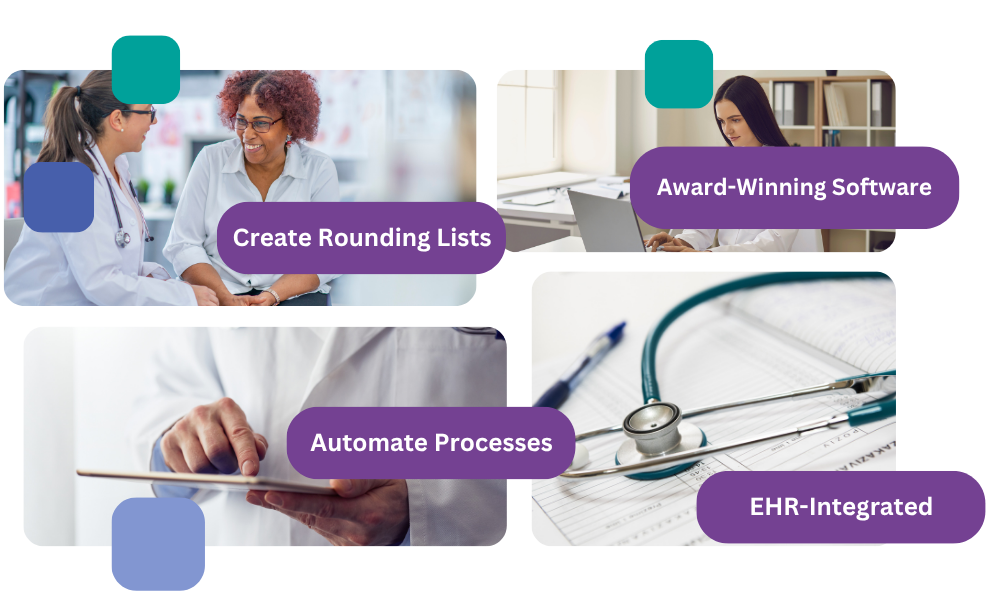
Assign is the healthcare industry’s only patient assignment tool that integrates seamlessly with EHRs and physician scheduling systems.



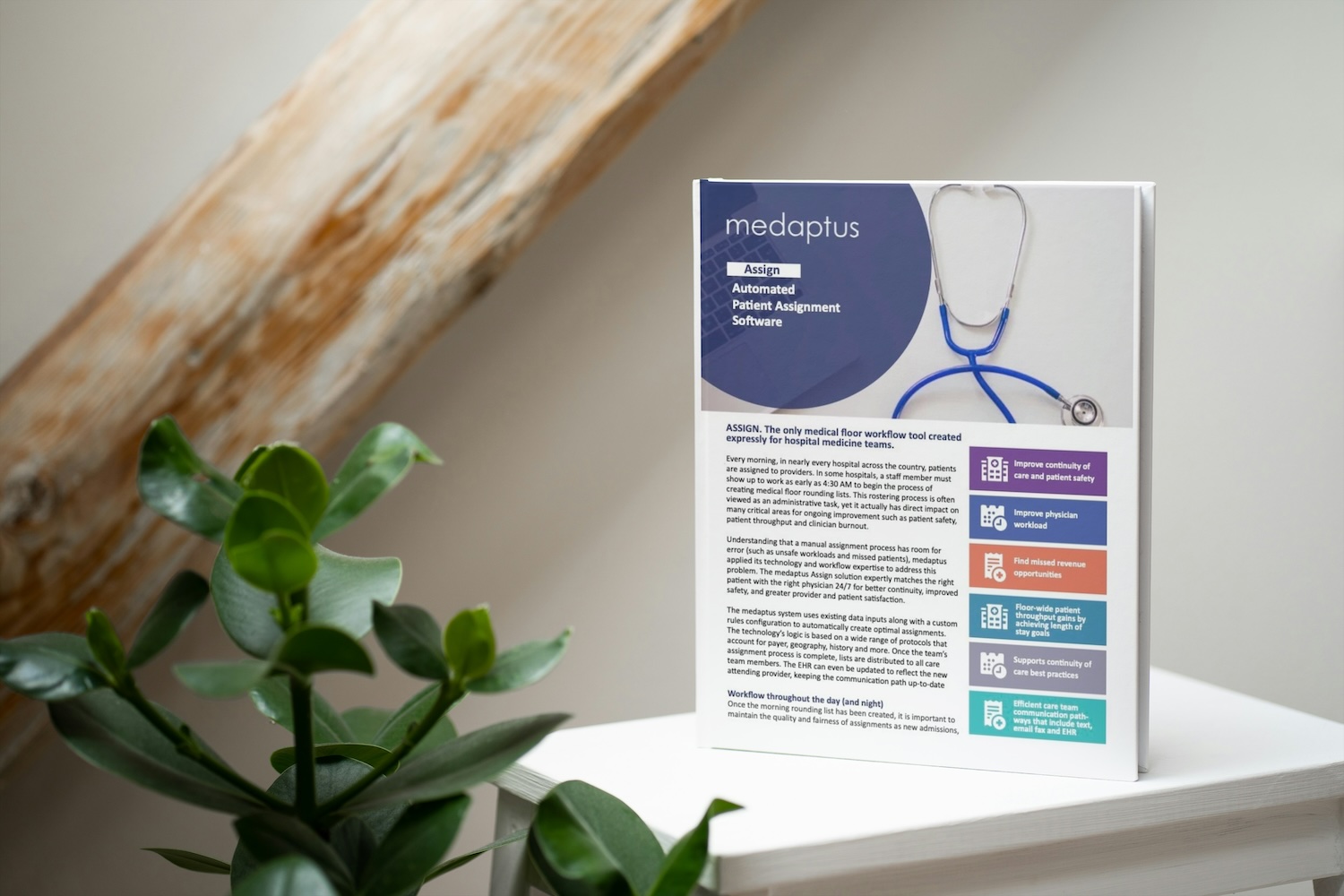
Get internal buy-in fast – download the short Assign summary to share with your department head. Show how Assign can eliminate manual patient distribution by automatically accounting for geography, continuity of care, and more.
Spend more time on patient care, less time on administrative tasks.
Meet departmental length of stay objectives and reduce costs of avoidable days.
Assign the same patients to the same providers on a daily basis for improved continuity and safety.
Reduce provider burnout with fair and balanced workloads.
Use real-time and historical insights to improve the hospital medicine program.
Implement in one facility or department and easily scale to others.
It only takes four simple steps to create a morning rounding list with Assign - regardless of complexity and census size.
Run your patient assignments based on the rules you select, in the order you define.
Commonly used patient assignment rules fall into four main categories:


Review, edit, finalize and distribute rounding lists to providers and sync the assignments with your EHR.
Automate patient assignment and optimize hospitalist workloads based on real-time census visibility and actionable insights.
Northwell reduced time spent on manual patient assignment from 3 hours to 10-15 minutes and is confident that the right providers are always assigned to the right patients.

– Rapid processing of numerous variables with consistent application of rules
– Enhanced transparency in decision-making and easier auditing for continuous improvement
– Ensures credential validation, licensing compliance, and payer compatibility prior to assignment
– Quick adaptation to new service lines or staffing models through easy rule adjustments
– Inconsistencies across personnel and shifts, leading to an increased chance of outlier decisions and the need for rework
– Dependence on informal communication methods, resulting in knowledge gaps and reliance on tribal knowledge
– Delayed error detection, which increases the cost and complexity of corrections
– Necessitates continuous retraining, frequent spreadsheet updates, and intensive manual supervision
Modern platforms enhance patient assignments by integrating data from healthcare tools and using predictive models. They capture data, check eligibility, and dynamically route based on skills and patient needs. The system constantly monitors and adjusts to optimize resource allocation and care, especially in emergency departments.
Healthcare investments yield returns through labor savings, enhanced efficiency, and cost reduction. Key benefits include shorter hospital stays, reduced labor costs, fewer patients leaving unseen, and better staff retention. Hospitals can increase case capacity by optimizing current resources. See our Case Studies for real-world testimonials.
Automation in organizations boosts efficiency, safety, and employee satisfaction, leading to better throughput and quality. It accelerates patient processing, optimizes care, balances workloads, assigns tasks fairly, reduces administrative duties, and enhances patient experiences. Furthermore, it offers administrators real-time staffing and workflow insights, enabling proactive management during peak periods and reducing diversion events.
Choose a platform that seamlessly integrates with current systems, ensuring safety and compliance. Key features include real-time EHR integration, staffing flexibility, predictive analytics, and multi-constraint matching. It should provide transparent assignments, mobile access, automated alerts, audit trails, strong security, and HIPAA compliance. Opt for vendors offering change management, clinical advice, and outcomes tracking to maintain ROI.

Subscribe to our newsletter today.

© 2026 medaptus. All Rights Reserved. Ⓒ medaptus