










Blog Summary
Physician groups that round in skilled nursing, long-term care and assisted living facilities tend to lose professional revenue in three places. Encounters never get logged, claims get denied after the visit, and visits get coded below the work performed. Lisa Krueger, MSN, MBA, a former post-acute nurse practitioner and operations leader who is now an executive healthcare advisor to medaptus, explains why each gap happens in post-acute care. Residents are seen on a 30- or 60-day cycle rather than daily, so the rounding list changes throughout the day. Place of service can shift from 31 to 32 when a Part A skilled stay ends, and since July 2025 CMS automatically rejects claims that get this wrong. Payers change mid-stay, and providers document in a facility EHR the group doesn’t own. She gives ten steps to close the gaps: capture the charge at the bedside, keep one working list per facility, confirm place of service and payer before claims go out, and set the primary diagnosis from the reason for that day’s visit. She also previews Face Sheet Auto-Registration, coming to the Charge Pro mobile app in November.
When I was rounding in skilled nursing facilities, I rarely made it down a hallway without a nurse stopping me. “I know it’s not in the book, but could you go see…” and then the name of a resident whose condition had changed overnight or whose labs had come back concerning. The book was a sheet of paper at the nurses’ station — that was simply how that facility let us know who needed to be seen. Seeing that resident was the right thing to do, but it was a billable encounter that existed only in my note and my memory until I entered the charge.
As our group grew and I moved from rounding into the operations side of the business, we expanded to more than 20 skilled nursing and long-term care facilities — and leakage got harder to catch as we grew, especially at facilities that wouldn’t grant us an interface. I also saw more denials come back for medical necessity and for the wrong payer as we scaled. The patterns I saw there show up in most groups doing this work, whether they cover a single skilled facility in their community or dozens across a region. Professional revenue in post-acute care tends to leak in three places: encounters that never get logged, claims that are denied after the visit, and visits that are coded for less than the work that was done.
Each of these comes from the way post-acute care differs from the hospital. Residents aren’t seen every day: federal rules require a physician visit at least once every 30 days for the first 90 days after admission and at least once every 60 days after that (42 CFR 483.30), which means the rounding list changes throughout the day instead of staying fixed. Providers also document in the facility’s EHR, which the group doesn’t own and usually doesn’t bill from.
1. Capture every encounter, including the hallway add-ons
In the hospital, every patient on the census is seen every day, so a charge grid quickly shows a patient who was seen without a charge. In a SNF or long-term care facility, most residents aren’t due on any given day. A blank row on a grid doesn’t tell you whether a charge was missed or whether the resident simply wasn’t due.
The patients who do need to be seen come from several directions: yesterday’s admissions, residents due for their 30- or 60-day visit, nurse requests after a change in condition, and follow-ups the provider planned. The admission visit deserves particular attention: it’s the visit where the plan of care for the stay gets set, so missing or delaying it doesn’t just cost a charge, it delays the plan the rest of the stay is built on. When I saw a resident for a wound I wanted to recheck in two days, the only record of that plan was a note I kept for myself. Many groups still work this way, with a paper list kept in a secured spot or a coordinator who is told which residents to add.
At facilities without an interface to the group’s systems, the morning list itself may be out of date. Residents who were discharged can still appear to be in-house, and new admissions may not have reached the group yet.
Any encounter that isn’t captured at the time of the visit depends on someone remembering it later. Charges entered at the end of the day, or after the provider has left the building, are the ones most likely to be missed.
What closes the gap:
- Enter the charge at the bedside, before moving to the next room, so a nurse’s hallway request is logged when it happens.
- Keep one working list per facility that includes new admissions, due visits, nurse requests, and planned follow-ups, instead of several lists in different places.
- Reconcile documented visits against submitted charges by provider and by facility on a set schedule, so a missing charge surfaces in days rather than at month-end.
2. Get place of service and payer right before the claim goes out
Some revenue is lost after the visit has been documented and charged. Two causes come up repeatedly.
Place of service. A resident in a Medicare Part A skilled stay is billed with place of service 31, skilled nursing facility. When that stay ends and the resident stays in the building for long-term care, the correct place of service becomes 32, nursing facility (CMS place of service codes). The nursing facility E/M codes, 99304 through 99310, are the same in both settings, so nothing in the note signals the change, and the facility’s EHR doesn’t always reflect it. Since July 2025, CMS runs an automated match on this: if a professional claim comes in billed with place of service 32 that overlaps a Part A SNF stay the facility already billed, CMS rejects the claim outright, and can adjust claims retroactively when the overlap surfaces later (MM13767).
Payer changes. Residents change coverage often: from traditional Medicare to Medicare Advantage, from one Medicare Advantage plan to another, or from traditional Medicaid to a Medicaid managed care plan. More than half of eligible Medicare beneficiaries (55%) are now enrolled in Medicare Advantage (KFF, 2026), so many residents arrive on, or move to, a plan with its own rules. If the group bills the prior payer, the claim comes back as not covered. The current payer is sometimes recorded in the facility’s billing system rather than its EHR, so the provider’s chart may not show it.
What closes the gap:
- Confirm place of service when a resident’s skilled stay ends. The facility’s case management team knows when a resident transitions, so set up a regular check-in with them.
- Run eligibility checks on a set interval, not only at admission.
- Track “not covered by this payer” denials by facility. A cluster at one building usually points to how payer changes reach the group from that facility.
3. Code the visit for why you were there
Payers don’t cover a visit just because it happened; it has to be medically necessary and fall within what that payer considers a reasonable cadence. Medicaid programs are a common example: many reimburse routine visits on a tighter cycle than traditional Medicare, so a visit that’s clinically appropriate can still come back denied if it falls outside what the payer expects, unless the claim shows why the resident needed to be seen. That justification lives in the diagnosis.
On recurring visits, it’s easy to carry the diagnosis list forward from the last encounter or from the resident’s history. I’ve done it myself. But if a nurse asked me to see a resident for shortness of breath overnight, the primary diagnosis for that visit needs to reflect the acute problem the documentation supports, such as acute respiratory failure, rather than the chronic conditions copied from last month.
When the diagnoses don’t match the reason for the visit, two things happen. A payer may deny an additional visit as more frequent than the resident’s conditions justify. And providers without dedicated coding support tend to code conservatively. Nursing facility E/M visits are leveled on medical decision making or total time, so a note that doesn’t show the complexity of an acute visit ends up billed at a lower level than the work performed.
What closes the gap:
- Know each payer’s visit-frequency expectations, especially for Medicaid and Medicaid managed care plans, and document the medical necessity when a resident needs to be seen above that cadence.
- Set the primary diagnosis for each visit from the reason the resident was seen that day, not from the prior encounter.
- Keep diagnosis shortcuts scoped to your specialty and setting, so the most common post-acute diagnoses are specific and quick to select.
- Review the distribution of visit levels by provider. When one provider bills well below peers for similar residents, a short chart review usually shows whether the documentation supports a higher level.
What point-of-care capture changes
The same workflow that serves hospitalists works in post-acute facilities: a provider sets up each facility as a location, finds the resident, and enters the charge. Charge Pro captures professional charges at the point of care, prompts for services that might otherwise be missed, and reconciles charges against documentation across every facility a group covers. It also supports diagnosis shortcuts by specialty and specificity edits that flag a diagnosis that needs more detail before the charge is submitted. It’s the same reconciliation our customers use in hospital medicine.
In November, medaptus is releasing a new enhancement to the Charge Pro mobile app which adds face sheet capture, built for facilities where the group has no EHR interface. The provider selects the facility, photographs the face sheet, and the app reads the demographics and registers the resident. From there the provider goes straight to procedure and diagnosis codes and submits the charge. If the resident is already registered, Charge Pro finds the existing record and offers it instead of creating a duplicate. If a field doesn’t read cleanly, the provider can type it in, accept the registration and follow up later, or retake the photo. Providers can also photograph additional documents, such as a progress note, and the app pulls details like diagnosis codes into the resident’s record. For a nurse’s hallway request, the resident can be registered and the charge submitted before the provider reaches the next room.
Go deeper on October 28
I’ll walk through all three gaps in more detail, with examples from SNF and long-term care workflows, in our webinar on October 28: 3 Places Physician Groups in Post-Acute Care Settings Lose Revenue, and How to Close the Gaps. The rest of this series covers the regulatory visit frequencies groups need to track, what to do when a facility won’t provide an interface, and moving beyond paper lists and provider memory. You can also see how medaptus supports physician groups in post-acute care.
FAQs
What is the difference between place of service 31 and 32?
Place of service 31 is a skilled nursing facility and is used when a patient is in a Medicare Part A skilled stay. Place of service 32 is a nursing facility and is used for patients who are not in a covered skilled stay, including long-term care patients in the same building. The nursing facility E/M codes (99304 through 99310) are the same for both, so the place of service has to be tracked separately when a patient’s status changes.
How often do physicians need to see patients in a skilled nursing facility?
Under 42 CFR 483.30, a patient must be seen by a physician at least once every 30 days for the first 90 days after admission and at least once every 60 days after that. A visit is timely if it happens no later than 10 days after it was due. In SNFs, required visits after the initial visit may alternate between the physician and a nurse practitioner, physician assistant, or clinical nurse specialist, subject to state rules. Payers may have their own frequency expectations on top of this.
Can we capture charges at facilities where we don’t have an EHR interface?
Yes. Charge Pro lets providers set up any facility as a location and enter charges at the point of care from a mobile device, whether or not there is an interface to your EHR or the facility’s. Face sheet capture, coming to the Charge Pro mobile app in November, lets providers register a resident by photographing the face sheet and move straight to the charge.
Why do post-acute claims come back as not covered by the payer?
Residents often change coverage mid-stay, such as moving from traditional Medicare to a Medicare Advantage plan. If the change hasn’t reached the group, the claim goes to the prior payer and is denied. Regular eligibility checks and a standing line of communication with each facility’s business office or case management team reduce these denials.
Where do physician groups in post-acute care lose the most revenue?
Most commonly in three places: encounters that are never logged, such as nurse requests during rounds; claims denied for place of service, payer, or frequency; and visits coded below the work performed because the diagnoses don’t reflect the reason for the visit.
About The Author
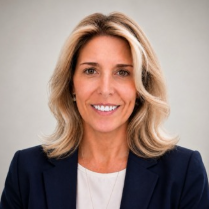
Lisa Krueger, MSN, MBA, is an executive healthcare advisor to medaptus and owner and principal advisor of Elite Healthcare Advisors. She began her career as an acute care nurse practitioner in hospitalist medicine and has spent more than 15 years in healthcare operations leadership, including directing national operations for more than 40 hospitalist programs and 90 post-acute facilities. Her work focuses on revenue cycle, revenue integrity, and charge capture for physician-led organizations, and she has led charge capture and documentation improvements that raised revenue capture by 25%.
Get the latest updates and news delivered to your inbox.
Subscribe to our newsletter today.