

Blog Summary
Hospital medicine and bed management teams share the same goal, getting patients into the right bed and out the door safely, but they often work from different information and different systems, which is exactly where coordination breaks down. Bed managers need real-time visibility into who is medically ready to leave and hospitalists need visibility into incoming demand. When those two views live apart, patients wait longer than they need to. Closing that gap does not require a new department; it requires connecting the workflows that already exist so both teams are working from the same picture.
I’ve talked with a lot of hospital medicine directors and bed management leads over the years, and I keep hearing some version of the same story. The hospitalist team knows exactly which patients are ready to go home today and the bed management team is trying to figure out where the next admission is going to land. Yet, those two pieces of information don’t make it to each other in time. Neither team is doing anything wrong. They’re usually working out of different tools, on different timelines, without a shared view of what’s actually happening across the hospital in real time.
That gap is where a lot of avoidable delay creeps in. These show up in ways that are easy to miss day to day but grow expensive over a year. I want to walk through where the disconnect actually happens, what the data says it costs hospitals when it isn’t fixed, and where a connected view, like the one medaptus Command provides, closes that gap without adding another department or another meeting.
Where Does Coordination Break Down Between Hospital Medicine and Bed Management?
The honest answer is that it’s rarely one big failure but a handful of small ones stacking up. A hospitalist marks a patient as ready for discharge, but that information doesn’t reach bed management or environmental services right away. This causes the bed to sit empty longer than it needs to after the patient physically leaves. Meanwhile, bed management is trying to plan for incoming admissions from the emergency department or a transfer request without a clean view of which inpatient beds are actually about to open up. Add in the reality that discharge planning, case management, nursing, and hospitalists are all touching pieces of the same patient’s stay without one person accountable for pulling it together in real-time, and you get a large coordination gap.
And the delayed discharges you experience aren’t usually caused by how sick the patient is, they’re caused by coordination breaking down around them. Research on transfer coordination has found that patients who experience a delayed transfer had a 53% increase in mortality risk compared to patients transferred without delay, according to the Institute of Healthcare Improvement. That’s not a small number, and it’s a good reminder that this isn’t just a financial problem, it’s a patient care problem too.
What Does an Effective Shared View Between Hospital Medicine and Bed Management Actually Look Like?
From what I’ve seen, it comes down to two pieces.
The first piece is real-time visibility. Both teams need to be looking at the same current census and the same discharge status, not a report that’s an hour old or a phone call that hasn’t happened yet.
The second piece is accountability. Someone needs to own moving a patient from medically ready to actually discharged because right now that task tends to fall into the gap between hospitalists, case management, and nursing, and nobody owns it end to end.
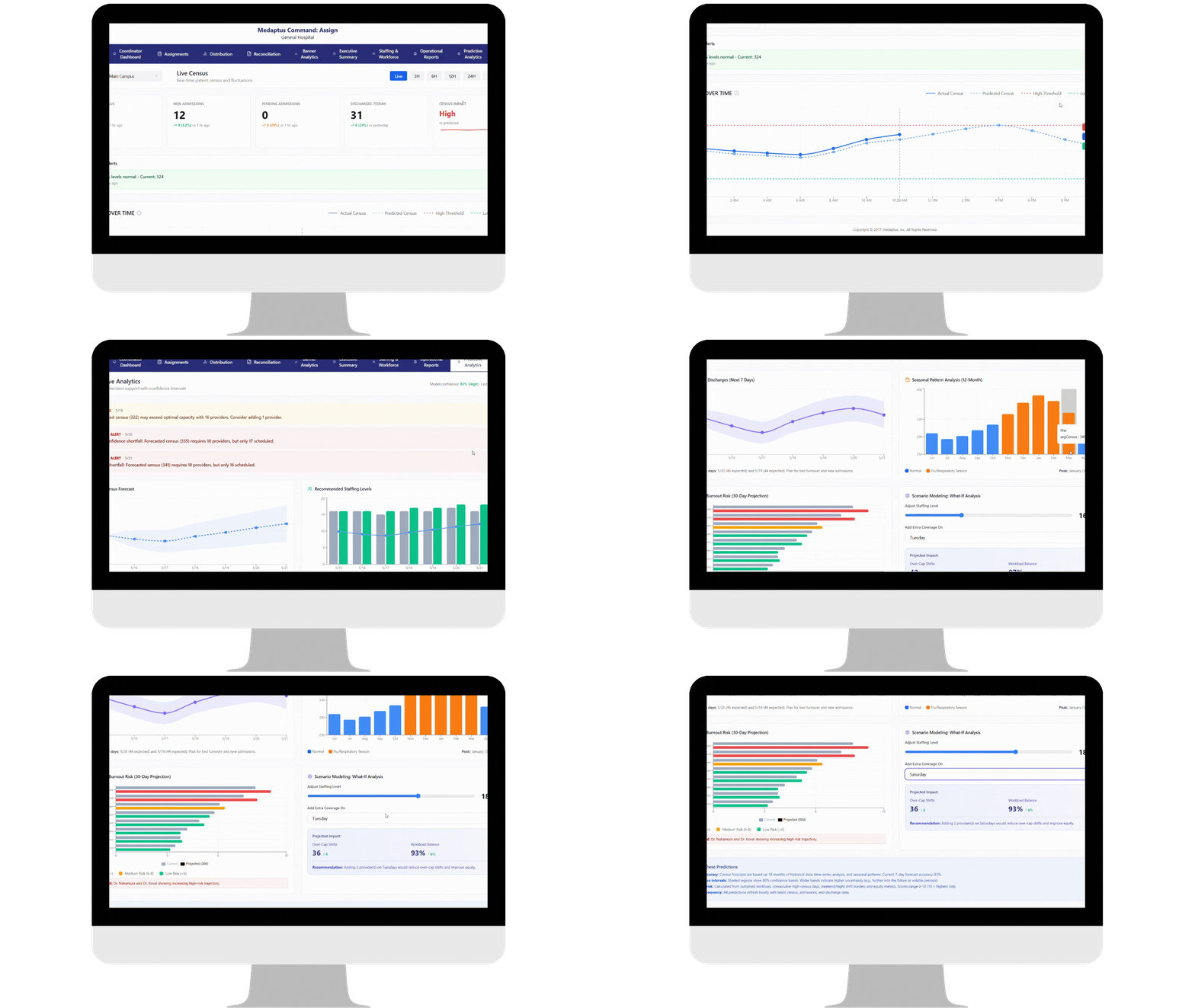
This is where medaptus Command comes in. Command is medaptus’s 24/7 operations platform for hospital medicine. It brings admission intake, assignment, distribution, reconciliation, and analytics into one connected view instead of the scattered tools most hospital medicine departments are running today. The Reconciliation module keeps the patient list accurate across teams, facilities, and shifts, so bed management and hospital medicine are looking at the same numbers instead of two versions that drift apart during the day. And the Analytics module gives leaders real-time visibility into census trends and discharge patterns instead of a report that shows up the next morning.
Analytics and Predictive Analytics Modules
Where Should Hospital Medicine and Bed Management Leaders Start?
I’d start by asking a simple question: when a patient becomes medically ready to leave, how long does it take before bed management and environmental services know about it? If the honest answer involves a phone call, a text, or someone remembering to update a whiteboard, that’s the gap worth closing first. It doesn’t require pulling in new staff or standing up a whole new department. It just requires connecting the workflows that already exist so both sides are working from one live picture instead of two separate ones.
Conclusion
Hospital medicine and bed management aren’t actually working against each other, they’re just usually working from different information at different times. Close that gap and the rest tends to follow: faster bed turnover, fewer emergency department boarding hours, and a discharge process that doesn’t depend on someone remembering to make a phone call. If you want to see what a connected view looks like for your hospital medicine department, medaptus Command is built around exactly that problem.
Interested in learning more about the Analytics module? Click here.
FAQs
Why do hospital medicine and bed management teams struggle to coordinate? They’re usually working from separate systems and separate timelines, so information about discharge readiness or incoming demand doesn’t reach the other team in real time.
Is this mainly a technology problem or a process problem? Both. The right technology only helps if there’s also clear ownership for moving a patient from medically ready to actually discharged.
Does connecting these workflows require adding staff? Not necessarily. The examples referenced above focused on connecting the tools and reporting teams already had, not adding headcount.
Does medaptus Command replace our bed management or EHR system? No. Command works alongside your existing EHR and bed management processes, adding a connected, real-time layer across admission, assignment, census, and discharge data.
What’s the first step for a hospital medicine leader who wants to close this gap? Start by measuring how long it takes for a medically-ready status to reach bed management and environmental services today. That number usually reveals where the coordination gap actually lives.

About The Author
Jaclyn Corbett is the Product Manager for medaptus Command and Assign, with over 13 years working at the intersection of healthcare operations and software development. She works directly with hospital medicine programs to understand how operational workflows break down and how technology can reconnect them.
Get the latest updates and news delivered to your inbox.
Subscribe to our newsletter today.